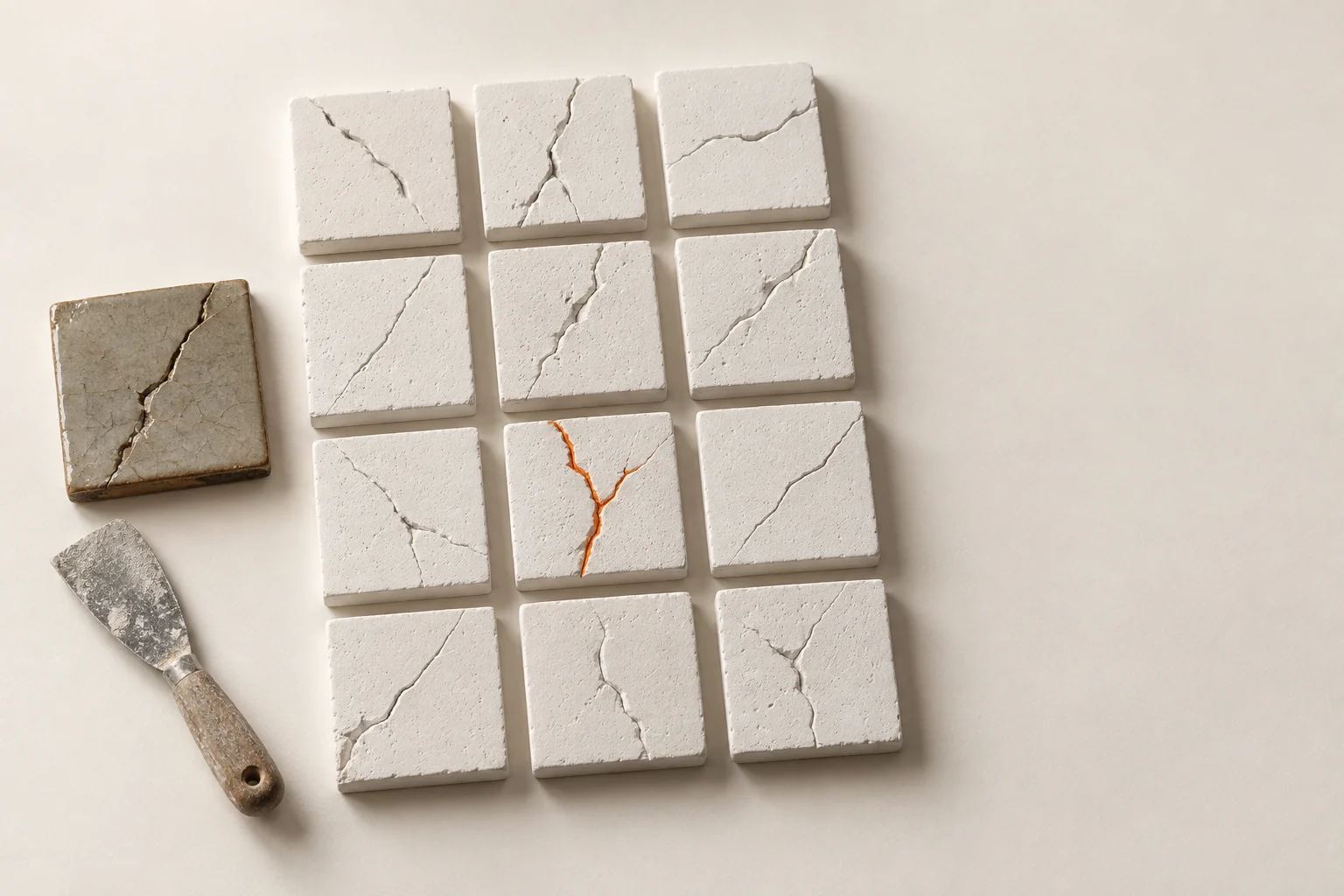
A written defect taxonomy
Each class is defined with your quality team — limits, examples and look-alikes that are not defects. See how to write an inspection spec.
Vision & Inspection
We engineer the dataset behind your inspection model — a defect taxonomy, audited labels, procedural and generative images of rare defects — and prove every model on real parts it has never seen.
The problem
The defects that cost the most are often the ones you have the fewest pictures of: a through-crack that turns up three times a year, a contamination event that has happened twice. A supervised model trained on four examples learns those four parts, not the defect.
Labels cause the next problem. One inspector calls a mark a scratch, another a scuff, a third passes it, and the model inherits the disagreement. Then the test set is built from random frames of the same few runs, the model scores 99%, and it misses defects in week two.
In industrial inspection the dataset decides more than the model architecture does. We treat it as an engineering deliverable, with the same rigor as the optics and the PLC logic.
How it works
Each class is defined with your quality team — limits, examples and look-alikes that are not defects. See how to write an inspection spec.
Two annotators label each image independently. Your quality engineer rules on disagreements, and per-class agreement shows which classes need redefining.
Parametric scratches, dents, missing features and contamination are rendered with controlled size, position, orientation and lighting, each with an exact pixel mask.
Image-generation models paint defects onto real images of good parts for textures that are hard to model by hand — wrinkles, stains, organic product variation.
Anomaly detection, supervised classification or both, chosen by how much defect data exists. See anomaly detection vs supervised classification.
Every model ships as ONNX, plus compiled builds for the target hardware — TensorRT on Jetson, or the Hailo and Qualcomm toolchains — with a model card and the recipe to retrain it.
The rule we don't break
Synthetic images are never in the test set. A model scored on generated images is being graded on how well it recognizes the generator's style, which tells you nothing about your line.
Before training starts, we freeze a test set of real, held-out parts — drawn from different lots, days and shifts than the training data, so near-identical frames cannot leak across. Every accuracy figure we report comes from that set.
We also train each model twice, with and without the synthetic data, and compare both on the same real test set. If the synthetic images do not improve detection on real parts, they come out of the training data, and the report says so.
Two kinds of synthetic data
| Aspect | Procedural | Generative |
|---|---|---|
| How it works | Rendered or composited from defect models with set parameters | An image model paints defects onto real images of good parts |
| Best for | Geometric defects — scratches, dents, missing features, misplaced parts | Texture-heavy defects — wrinkles, stains, discoloration, organic variation |
| Labels | Pixel-exact masks come with every image | Masks must be checked; the model may draw outside the requested region |
| Main risk | Images look too clean, so the model learns the rendering | Plausible-looking defects that never occur in real production |
Process
We inventory your images, labels and reject records, looking for leakage, duplicates, class imbalance and gaps in lot and shift coverage.
Defect classes are agreed in writing, real images are labeled and adjudicated, and the real test set is frozen before any model sees it.
Synthetic images fill the gaps the audit found. Candidates are trained with and without them, then compiled for the target hardware.
Results on real held-out parts, per class, with a model card. After go-live, Perflens Care uses the same recipe for retraining.
Deliverables
Honest fit
See it in context
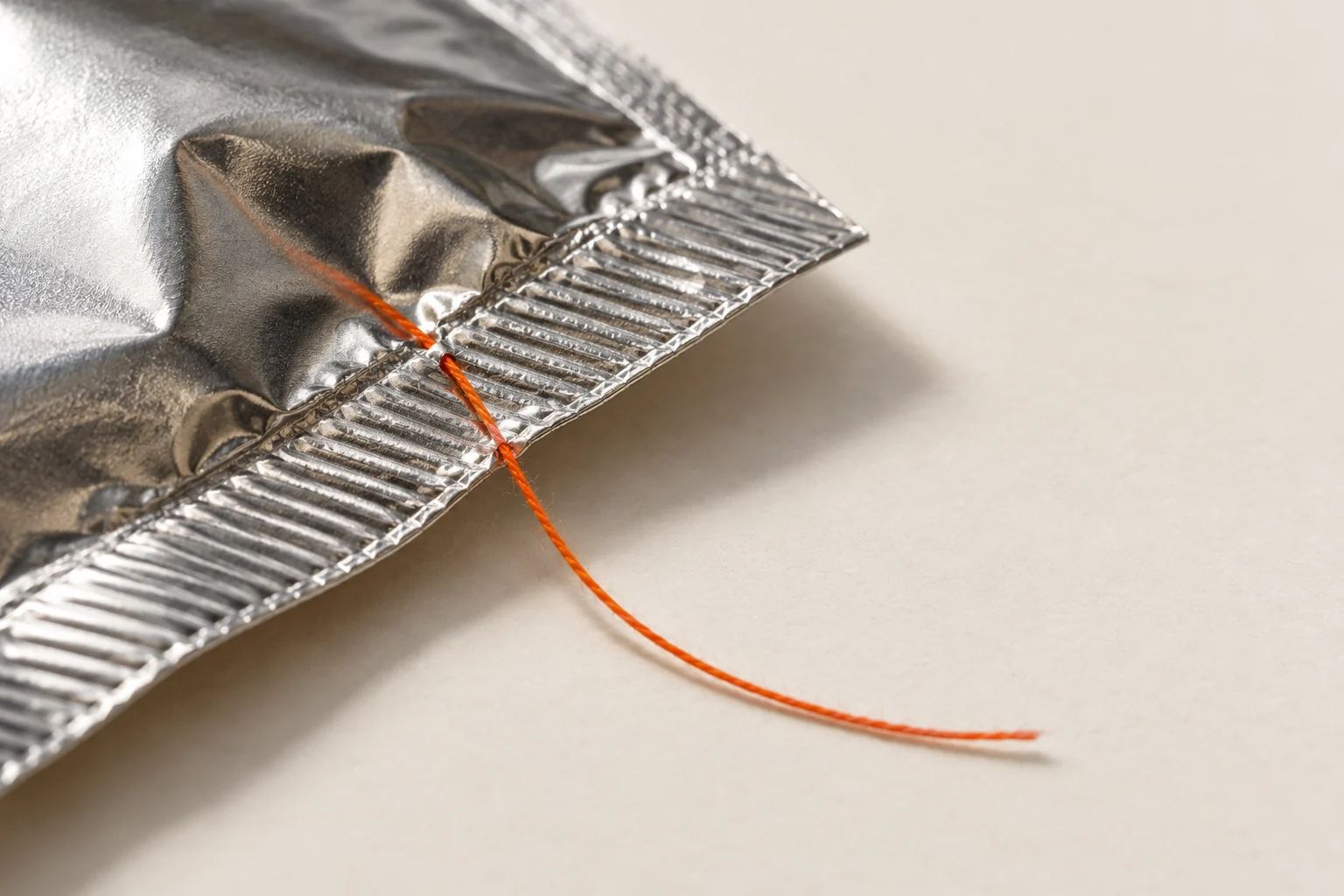
Leaking seals are rare and varied, which makes a modeled snack line a natural case for careful defect data.
Read more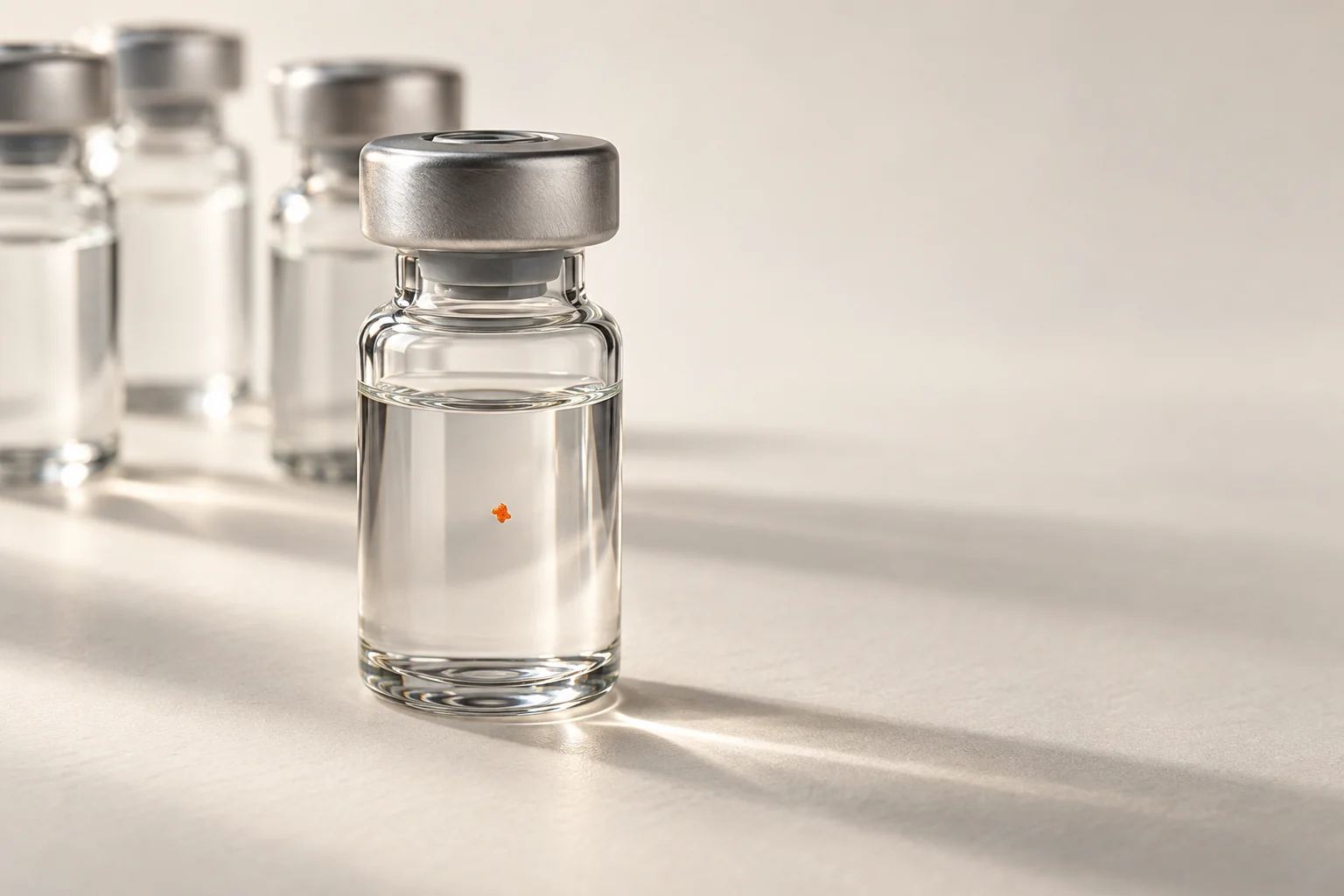
Particles, cracks and cosmetic defects that occur rarely and must be documented thoroughly.
Read more
Priya Venkataraman on the failure modes of synthetic defect data.
Read moreFAQ
Enough to test against. We want real examples of every class in the frozen test set; 5–10 of a rare class is workable, but the uncertainty on its detection rate is wide, and the validation report states how wide.
Only if the problem is coverage — too few examples of a defect, a lighting condition or a product variant. If the problem is poor contrast or inconsistent labels, synthetic images make it worse, and the audit will tell you which you have.
No. Your images, labels, synthetic sets and trained models belong to you and are used only for your systems.
Yes. We deliver ONNX files and compiled builds for common edge targets. If your current system cannot run modern models, see vision retrofit.
What the model is for, the data it was trained and tested on, per-class results on real parts, known weaknesses, the target hardware and every version since go-live.
Most clients start with a $9,500 Feasibility Sprint, which includes a baseline model. Dataset work is then scoped in writing, within an inspection project or on its own. See pricing.
A Feasibility Sprint tells you whether better data can close the gap — measured on your real parts, never on generated ones.