Switchgear and busway thermal
Lensnode T cameras with fixed views of connections, through IR windows or from mounting positions agreed with your electrical engineer, reporting temperature rise per connection, against load.
Data centers & critical power
We install fixed radiometric thermal cameras on switchgear, busbars and BESS containers, and condition sensors on UPS and cooling equipment, so a loosening connection shows up as a trend rather than an outage.
What goes wrong
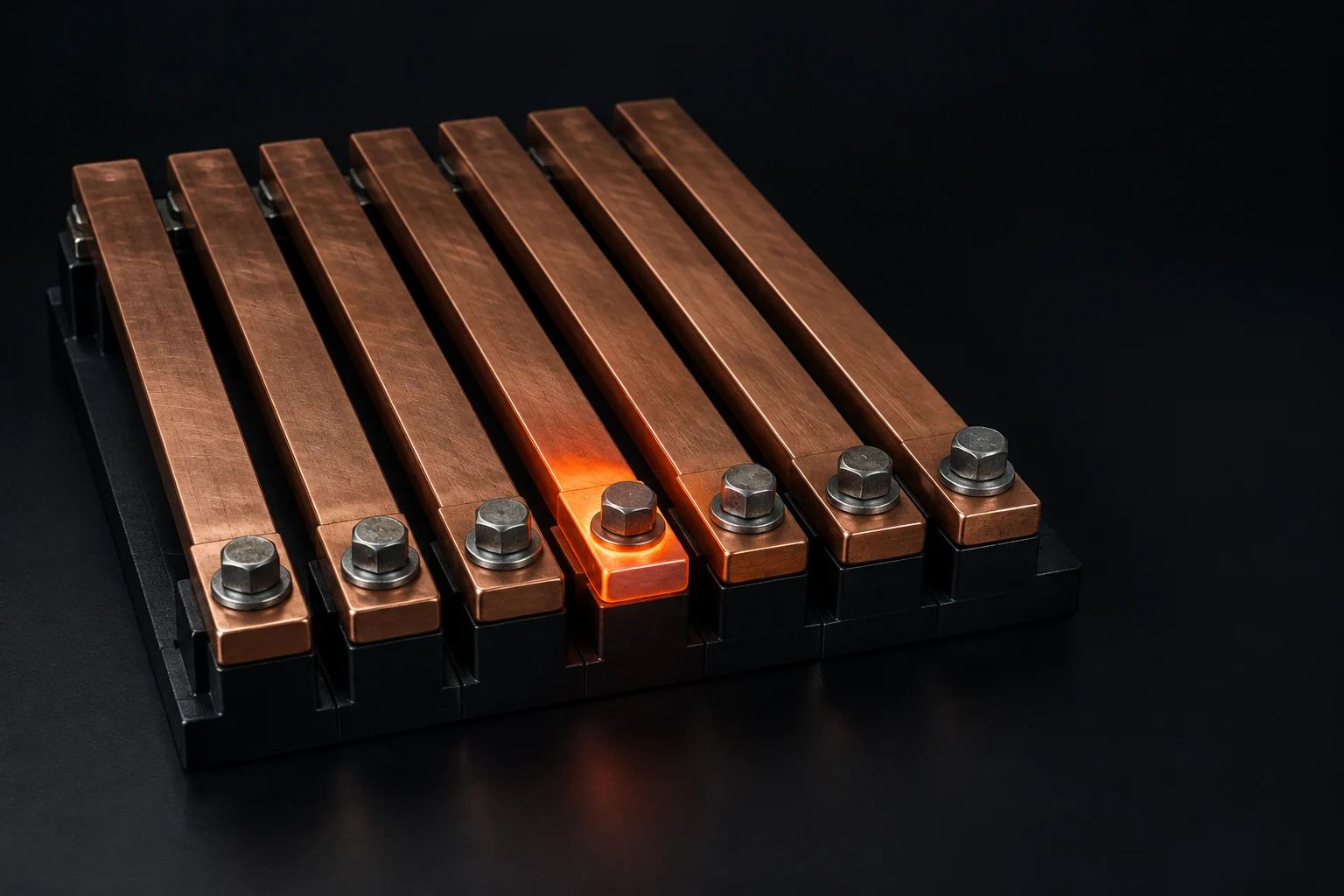
Most electrical failures in critical power announce themselves as heat. A bolted connection loosens with thermal cycling, a lug corrodes, a breaker contact wears, and resistance rises until the joint runs hot. Periodic infrared surveys catch some of these, but a survey is a snapshot: one day, one load level, often with covers removed and the crew in arc-flash PPE. A connection that starts degrading the week after the survey has months to get worse.
Some assets are hard to survey at all. BESS containers are sealed, crowded and often remote. Outdoor substations sit in weather that a handheld camera and a technician would rather avoid. Medium-voltage gear may need an outage window before covers can come off.
Cooling is the other half of uptime. A failing fan bearing in a CRAH unit, a chiller compressor running rough or a pump losing efficiency rarely trips an alarm until it fails, and in a dense hall the margin between a cooling fault and a thermal event is short.
Applications
Lensnode T cameras with fixed views of connections, through IR windows or from mounting positions agreed with your electrical engineer, reporting temperature rise per connection, against load.
Pulsenode C clamp-on nodes measure load, phase imbalance and harmonics on each panel, with thermal views of main lugs where they can be seen.
Thermal views of racks, busbars and connections, with condition sensors on the container HVAC, complementing the cell-level data your battery management system already reports.
Cabinet and battery-string connection temperatures, plus input and output harmonics and cooling-fan condition, trended continuously rather than at each service visit.
Pulsenode W vibration and temperature on CRAH and CRAC fans, chillers, pumps and cooling-tower fans, with diagnostics that name the likely fault.
Gatepoint XT, rated for −40 to 70 °C, with Lensnode T views of transformer bushings, disconnects and cable terminations in weather that keeps people away.
Recommended stack
| Application | Hardware | Service |
|---|---|---|
| Switchgear and busway | Lensnode T (640 × 512 radiometric); Gatepoint G4 or XT | Thermal & Multispectral Monitoring |
| PDUs and remote power panels | Pulsenode C; Lensnode T on main lugs | Facility & Energy Monitoring |
| BESS containers | Lensnode T inside the container; Pulsenode W on HVAC; Gatepoint XT | Thermal & Multispectral Monitoring |
| UPS systems | Lensnode T; Pulsenode C on input and output | Thermal & Multispectral Monitoring |
| Cooling plant | Pulsenode W on fans, pumps and compressors | Predictive Maintenance |
| Outdoor substations | Lensnode T with sun shield; Gatepoint XT | Thermal & Multispectral Monitoring |
Environment and compliance
Honest fit
See it in context
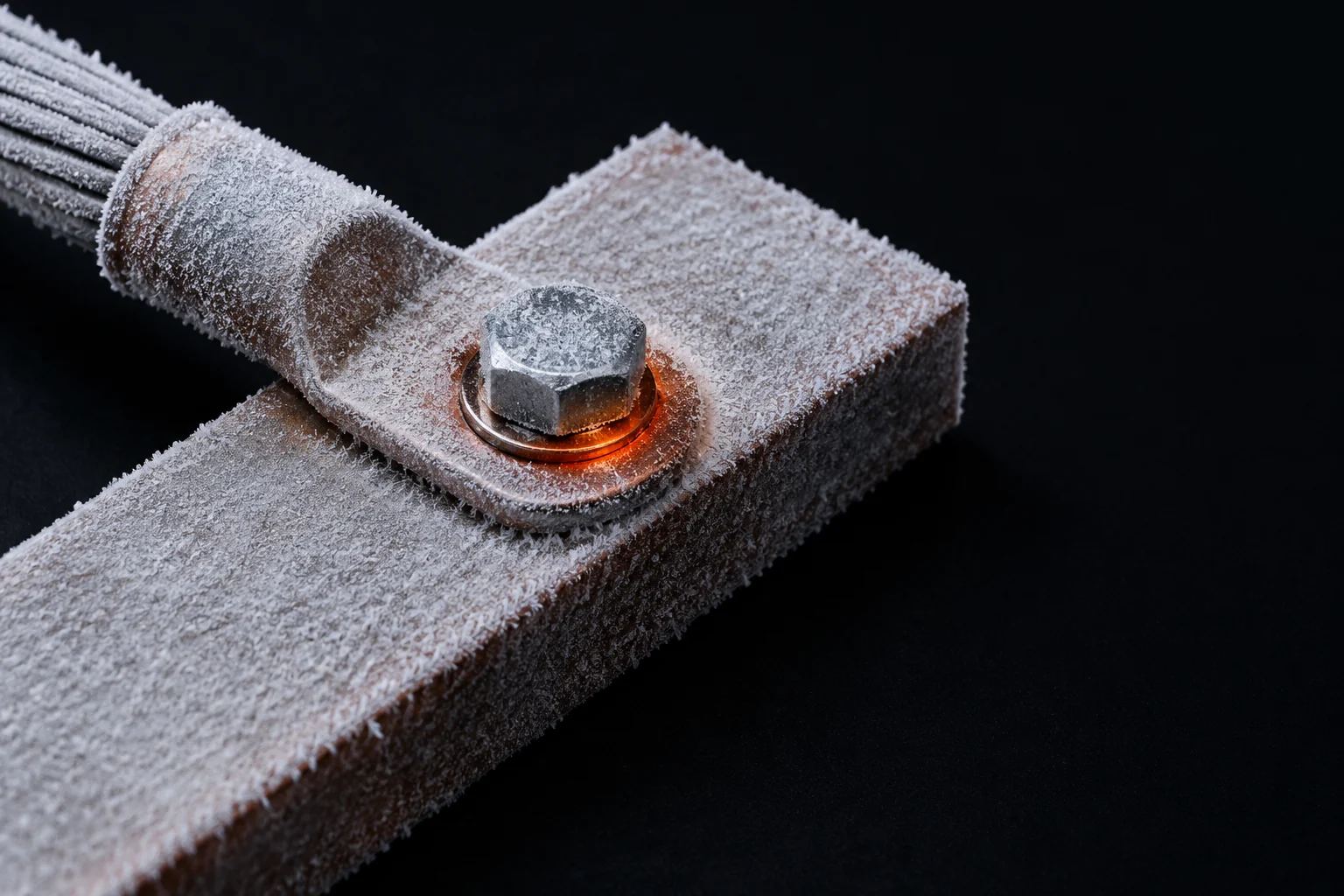
Lensnode T and Gatepoint XT watch medium-voltage switchgear and BESS containers. In the modeled scenario, connection faults are flagged weeks before a periodic IR survey would have found them.
Read more
Fixed radiometric thermal for switchgear, busbars, BESS containers and substations, with load-aware alerting.
Read more
Vibration, temperature and motor-current monitoring for fans, chillers, pumps and cooling towers.
Read moreFAQ
Not automatically. That depends on your electrical maintenance program and on what your authority having jurisdiction and insurer accept. What continuous data does is show which assets are trending, so surveys and outage windows go where they matter. Our comparison of continuous thermal and periodic IR surveys covers the trade-offs.
On bare, shiny metal, not very, for any thermal camera, because low emissivity makes the surface read colder than it is. We measure on high-emissivity surfaces or applied targets, record each measurement point, and alert on temperature rise and trend rather than on a single absolute number.
Gatepoint gateways on a network segment you define, with no internet connection required. They support secure boot, TPM 2.0 and signed A/B updates, and our security documentation, including SBOMs, is available for your review before installation.
Yes. Data and alerts can go to your power or building management systems over Modbus TCP, MQTT, OPC UA or REST webhooks, and to SMS, email, Microsoft Teams or Slack. With Care Dedicated, a Perflens analyst verifies alerts within 1 hour, 24/7.
A 6-week Proof of Value covers up to 25 monitored assets for $24,000, with loaner hardware and success criteria agreed in writing. A sensible first scope is your main switchgear lineup plus the BESS or UPS systems that worry you most.
Walk us through your one-line diagram and your last survey report. We'll tell you which assets would benefit from continuous thermal and which are fine on a schedule.