Weld-nut and fastener presence
Presence, count, position and thread checks on projection-welded nuts, studs and clips, frequently on the plant's existing cameras through Vision Retrofit.
Automotive & mobility
We add AI inspection to stamping, welding and paint lines, often on cameras you already own, and tie every result to a part serial your customer can trace.
What goes wrong
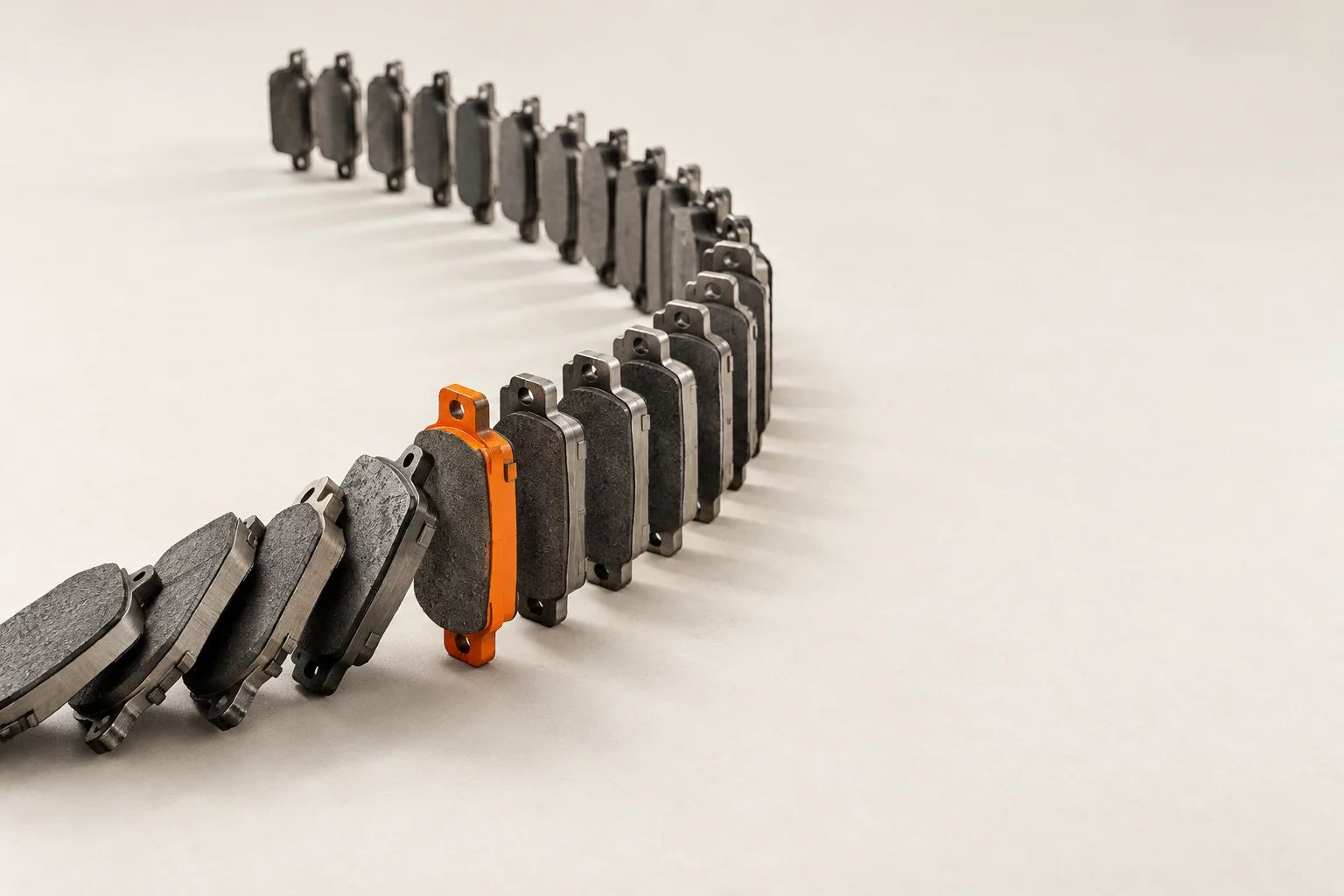
In automotive supply, the cost of a defect is set by where it is found. A projection-weld nut missing from a stamped bracket costs almost nothing at the press. Found at your customer's assembly plant, it can mean containment, third-party sorting, chargebacks and a scorecard mark that follows you into the next sourcing decision.
Many stations already have cameras, installed years ago with rule-based tools tuned for one part and one lighting condition. Today they either false-reject often enough that operators find ways around them, or they pass parts they shouldn't. Weld seams and painted surfaces are harder still, because no two defects look alike.
The equipment carries its own risk. An unplanned stop on a transfer press or a robotic weld cell starves everything downstream, and with sequenced, just-in-time deliveries there is very little buffer to absorb it.
Applications
Presence, count, position and thread checks on projection-welded nuts, studs and clips, frequently on the plant's existing cameras through Vision Retrofit.
Seam presence, length and position, plus visible porosity, burn-through and excessive spatter on MIG/MAG seams, judged in the robotic cell before the part moves on.
Dents, dings, scratches, craters, inclusions and runs. On reflective panels we use patterned lighting in the style of deflectometry, so shallow dents show up as distortions in the reflected pattern.
Vibration, temperature and motor current on main drive motors, flywheel bearings, gearboxes and lube pumps, trended per stroke rate so a change in load isn't mistaken for a fault.
Reducers and servo motors trended during the same repeatable move each cycle, which turns a robot's routine into a consistent test of its own condition.
Every image, decision and model version keyed to the serial or Data Matrix code from your reader or PLC, and written to your MES for genealogy.
Recommended stack
| Application | Hardware | Service |
|---|---|---|
| Weld-nut and fastener presence | Existing GigE Vision cameras or Lensnode V; Gatepoint G2 | Vision Retrofit |
| Weld seam inspection | Lensnode V with shielded mount; Gatepoint G4 for multi-angle cells | AI Visual Inspection |
| Surface and paint defects | Several Lensnode V with patterned illumination; Gatepoint G4 or G8 | AI Visual Inspection with custom optics |
| Press condition | Pulsenode W on bearings and gearboxes; Pulsenode C on the main drive | Predictive Maintenance |
| Robot and conveyor health | Pulsenode W and controller data over OPC UA or EtherNet/IP | Predictive Maintenance |
| Serial-level traceability | Gatepoint with your code reader and MES connection | PLC and MES integration |
Environment and compliance
Honest fit
See it in context
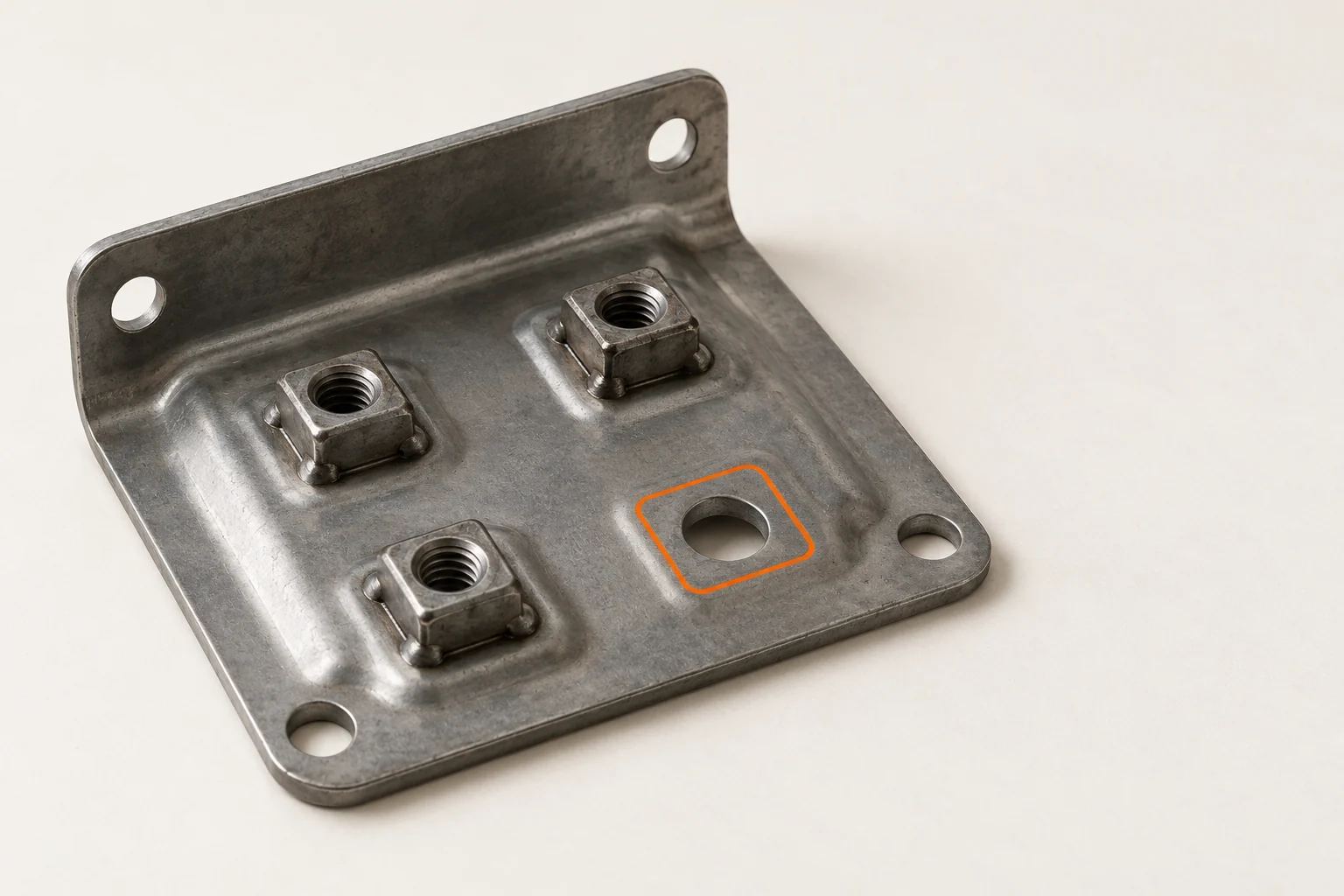
A stamping line adds AI to the cameras it already owns, with a PLC handshake. In the modeled scenario, no missing-nut escapes reach the customer and manual audit time falls about 70%.
Read more
AI models on the cameras and lines you already own, with PLC and MES integration included in the job.
Read more
Vibration, ultrasound, temperature and motor-current monitoring for presses, robots and conveyors.
Read moreFAQ
Often, yes. If they are GigE Vision or similar industrial cameras with adequate resolution and a stable lighting setup, we can run new models on their images through a Gatepoint. If the lighting is the problem, we change the lighting and keep the camera. Our article on retrofit or replace covers how we decide.
Over digital I/O, EtherNet/IP or PROFINET, with a handshake for part present, result and a heartbeat. You choose the fault state, usually holding the reject gate and lighting a stack light rather than stopping the line. See encoders, handshakes and reject gates.
The Gatepoint receives the part serial or Data Matrix code from your reader or PLC and stores each image, decision and model version against it. Results go to your MES over OPC UA, MQTT or REST, so a query on a serial returns the inspection record.
Every model version is held in a registry with a model card, and each inspection result records the version that made it. Updates are tested in shadow mode first, deployed as A/B updates that can be rolled back, and logged, so you can show your customer exactly what changed and when.
Retrofit work is quoted after a Feasibility Sprint, because it depends on what you already own. New stations follow our published pricing: Inspection-as-a-Service from $2,950 per station per month, or typically $48,000–$140,000 installed as a capital purchase. See pricing.
Send the part, the defect and the customer complaint. In a three-week Feasibility Sprint we tell you, in writing, whether we can catch it on your line.