Pulsenode W
Wireless and battery-powered, with tri-axial vibration from 2 Hz to 10 kHz, surface temperature and magnetic flux. Up to 5 years on a battery at hourly sampling; IP68; Class I Division 2 variant.
IoT Monitoring
Pulsenode sensors watch vibration, ultrasound, temperature and motor current on the assets that matter. Each alert names the likely fault, is checked by an analyst before it reaches you, and lands in your CMMS as a work order.
The problem
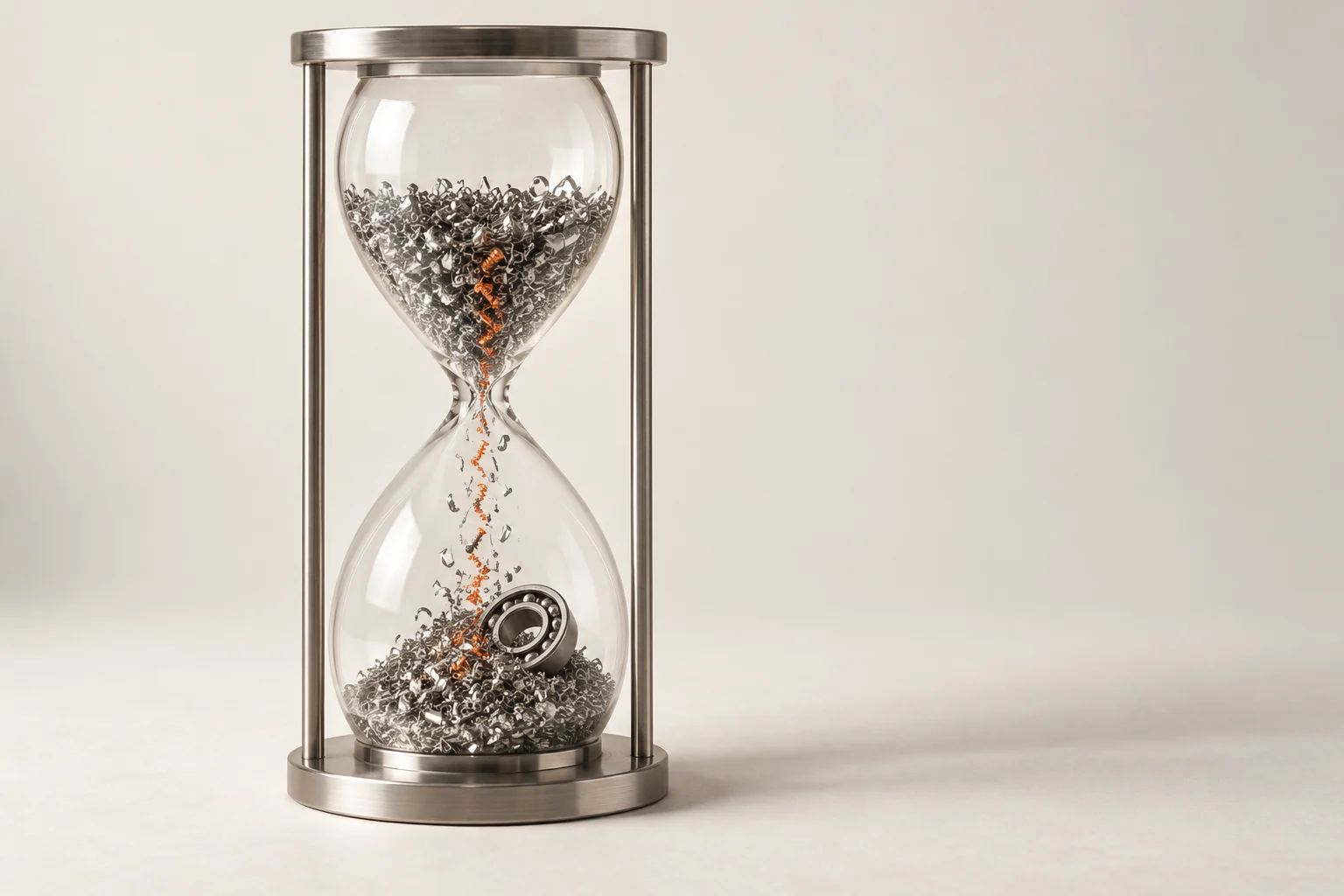
Many condition-monitoring rollouts fail the same way. Sensors go on every motor in reach, each with a vibration threshold, and within a month the maintenance team is getting dozens of alarms a week. Most are a pump that runs rougher at low flow, or a sensor knocked loose during a guard change. After the third false alarm, people stop reading them — and the one that mattered gets read on Monday.
Route-based collection has the opposite problem. A technician with a handheld analyzer visits each asset once a month, which is fine for faults that develop over months and blind to the ones that develop over days.
Reliability teams need fewer, better alerts: which asset, which fault, how urgent, and what to do about it — with enough evidence that a planner will schedule the work.
How it works
Each Pulsenode measures something different. Fault diagnostics in the Asset Health module combine them, so an alert names a probable cause instead of just a level.
| Failure mode | What the signal shows | Sensor |
|---|---|---|
| Imbalance | High vibration at 1× running speed, mostly radial | Pulsenode W |
| Misalignment | Raised 1× and 2× running speed, often with strong axial vibration | Pulsenode W |
| Bearing defects | Energy at the bearing's defect frequencies and a rising high-frequency floor; harmonics and sidebands as damage grows | Pulsenode W; Pulsenode U for early stages |
| Mechanical looseness | Many harmonics of running speed, sometimes half-orders | Pulsenode W |
| Lubrication faults | Rising ultrasound levels from friction before vibration changes | Pulsenode U |
| Electrical faults | Current imbalance and harmonics, sidebands around line frequency, magnetic-flux changes | Pulsenode C; Pulsenode W magnetic flux |
Sensors, software and people
Wireless and battery-powered, with tri-axial vibration from 2 Hz to 10 kHz, surface temperature and magnetic flux. Up to 5 years on a battery at hourly sampling; IP68; Class I Division 2 variant.
A clamp-on electrical node for panels and motor control centers — current and voltage harmonics, phase imbalance and energy for each motor feed.
Ultrasound from 20 to 100 kHz catches early lubrication faults before vibration rises, and also checks compressed-air leaks and steam traps.
Spectra, trends and fault classification for each asset in Perflens Console, with severity and a recommended action.
With Care Verified, a Perflens analyst reviews the data behind each alert within 4 business hours before it reaches your team. False alarms stop at the desk.
Verified alerts open work orders through the API of systems such as IBM Maximo, SAP PM, Fiix, Limble or UpKeep, with the evidence attached.
Where to start
Not every motor deserves a sensor. We start with an asset criticality ranking, run with your maintenance and production leads: what each failure costs in lost production, safety exposure, repair cost and spare-part lead time, and how likely it is given the asset's history and duty.
The ranking becomes a criticality register you keep. The downtime cost calculator is a good way to put numbers on the A list before the call.
Process
We rank the candidate assets with your team and agree which ones are worth continuous monitoring.
Loaner Pulsenodes and a gateway on up to 25 assets, with success criteria agreed in writing — for example, alert precision and which fault types must be caught.
Sensors mounted, gateways commissioned, CMMS connected, and a normal baseline learned for each asset across its usual operating range.
Analysts verify alerts, work orders flow to planners, and Perflens Care reports alert precision and asset health every month.
Pricing and commitments
per monitored asset per month, including Pulsenodes, gateway, Console and Care Essentials
assets minimum on a 36-month subscription
analyst verification of alerts on business days with Care Verified
Pulsenode W battery life at hourly sampling (up to)
Care Verified adds $18 per asset per month. Capital purchase is also available. See pricing.
Honest fit
See it in context
Pulsenode W and Care Verified on drives, gearboxes and fans, with unplanned downtime on monitored assets down about 35% in the modeled scenario.
Read more
Continuous lines where one failed drive stops everything downstream.
Read more
Presses, rolling equipment, fans and hydraulic units in heat, dust and vibration.
Read moreFAQ
Severe faults are flagged from day one against general severity limits. Asset-specific alerts improve over the first weeks as each machine's normal baseline is learned across its usual loads and speeds.
With Care Verified, a Perflens analyst looks at the spectra, trend and operating context behind each alert within 4 business hours, confirms or dismisses it, and adds the likely fault and a recommended action. Care Dedicated verifies within 1 hour, 24/7.
For most bearing, alignment and balance problems, which develop over weeks or months, yes. Critical assets can sample more often at the cost of battery life, or be watched continuously by a wired Pulsenode C.
Pulsenode W has a Class I Division 2 variant. We review your area classification during the site walk and mark any locations it doesn't cover.
Existing online systems that publish data over OPC UA or Modbus can feed the same Console, so verified alerts and work orders cover old and new sensors alike.
A six-week Proof of Value puts loaner Pulsenodes on up to 25 assets and measures what verified alerts are worth on your site.