Heat-seal integrity
Low-angle red illumination raises wrinkles, channels and product trapped in the seal, so the model judges every pack at line speed and stores an image of each reject for QA.
Food & beverage
We put AI inspection on the seals, labels and fills your customers judge you by, in stainless housings rated for daily washdown, and we watch the refrigeration that protects everything downstream.

What goes wrong
In food and beverage, the costly failures rarely look dramatic on the line. A pouch with a 0.2 mm channel through the heat seal looks fine at the case packer and goes stale, or worse, on a store shelf. A sleeve left over from the previous SKU ends up on product with a different allergen profile. A date code smears across the film and a distributor refuses the pallet. Each of these is a few pixels on a camera, and each can turn into a retailer chargeback, a market withdrawal or a recall.
The usual defenses are stretched thin. Operators pull a few packs per hour while running the machine. Rule-based vision tuned for one SKU struggles after the next changeover. Metal detectors and X-ray were never meant to read a label or judge a seal. And plenty of inspection hardware fails the first time a sanitation crew turns a hose on it.
Behind the line, the cold chain carries its own risk. A refrigeration compressor that runs hot for a week before it trips, or a condenser fan losing a bearing, can put a room of finished product at risk overnight.
Applications
Low-angle red illumination raises wrinkles, channels and product trapped in the seal, so the model judges every pack at line speed and stores an image of each reject for QA.
Lensnode M images eight bands from visible light to 1,000 nm, where many plastic, wood and stone fragments look different from product even when the color matches. See our note on hyperspectral foreign-material detection.
Confirms the right label is on the right product for the active SKU, and that lot and date codes are present, legible and correct against the order your PLC or MES sends.
Backlit and side-view inspection of fill height, cap presence, cap skew and tamper bands on bottles, jars and cups, without touching the container.
Pulsenode sensors trend vibration, temperature and current on compressors, condenser fans and evaporator motors, so a failing component shows up well before the room temperature moves.
Machine-state capture on fillers, wrappers and case packers counts the jams and short stops nobody logs. See equipment performance and OEE tracking.
Recommended stack
A starting point, not a bill of materials. The Feasibility Sprint confirms optics and lighting for your actual product.
| Application | Hardware | Service |
|---|---|---|
| Heat-seal integrity | Lensnode V with low-angle red strobe; Gatepoint G2 | AI Visual Inspection |
| Surface foreign material | Lensnode M (8-band multispectral); Gatepoint G4 | AI Visual Inspection with custom optics |
| Label, allergen and date code | Your existing cameras or Lensnode V; Gatepoint G2 | Vision Retrofit |
| Fill level and closures | Lensnode V with backlight; Gatepoint G2 | AI Visual Inspection |
| Refrigeration compressors and fans | Pulsenode W and Pulsenode C; Gatepoint XT in cold rooms | Predictive Maintenance |
| Filler, wrapper and case-packer stops | Pulsenode C or PLC signals into a Gatepoint | Equipment Performance & OEE |
Environment and compliance
Honest fit
See it in context

Lensnode V with low-angle red light and a Gatepoint G2 on a snack pouch line. In the modeled scenario, leaking-seal escapes fall about 90%, with false rejects under 0.3%.
Read more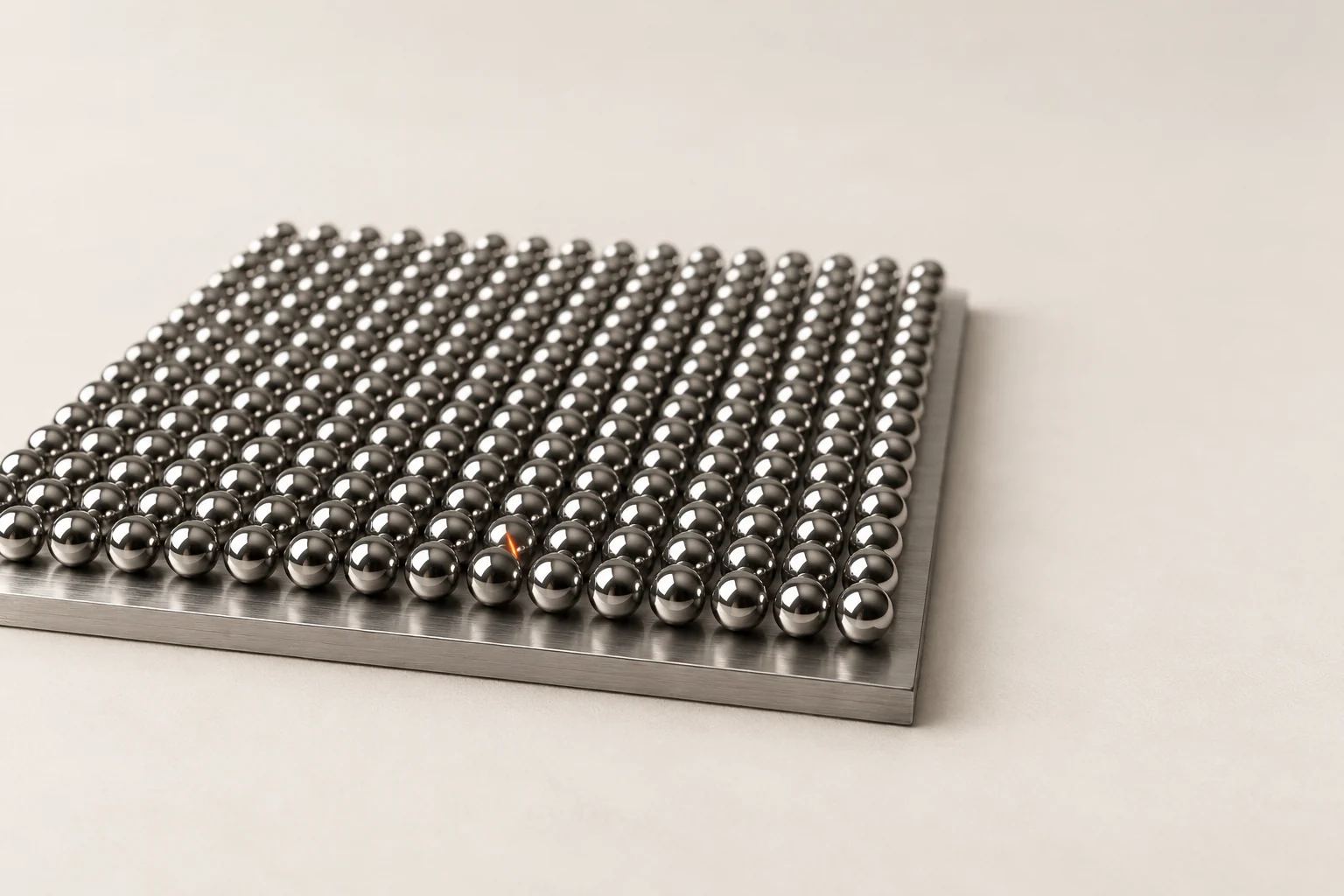
Turnkey inspection cells for seals, labels, fills and foreign material, from optics lab to PLC reject logic.
Read more
Refrigeration health, compressed air and energy sub-metering for the plant around the line.
Read moreFAQ
Lensnode cameras are available in an IP69K housing in 316L stainless steel, designed for close-range, high-pressure, high-temperature washdown. We mount the Gatepoint compute outside the wash zone and check your sanitation chemicals against the housing and seal materials during scoping.
No. Cameras, including multispectral ones, see the surface of the product. They are good at contaminants that are visible but look like product to a person; metal detection and X-ray find what is buried inside it. Most plants that add vision keep both.
The PLC or MES tells the Gatepoint which SKU is running. For label and code checks, adding a SKU is usually a configuration step, with reference artwork and expected text, rather than a retraining job. Seal and fill models are trained per package format, not per flavor.
No single system does that. Perflens inspection is designed to support the monitoring and verification records your food safety plan calls for, with an image, timestamp and model version for every decision. Compliance remains a matter for your food safety team and your plan.
Inspection-as-a-Service starts at $2,950 per station per month on a 36-month term, with hardware replacement and Care Essentials included. A capital purchase is typically $48,000–$140,000 installed. Most plants start with a $9,500 Feasibility Sprint; see pricing.
In a three-week Feasibility Sprint we image your packs in our optics lab and tell you, in writing, whether the defect is reliably detectable at your line speed.