Services
Platform
Industries
EngagementsPricing
Resources
Company
Book a discovery call (470) 784-4045

Lifecycle

Edge devices your security team can approve

We harden edge devices, place them in zones and conduits, ship SBOMs and signed updates, and handle vulnerabilities openly — designed in line with IEC 62443. Equipment makers also get practical help preparing for the EU Cyber Resilience Act.

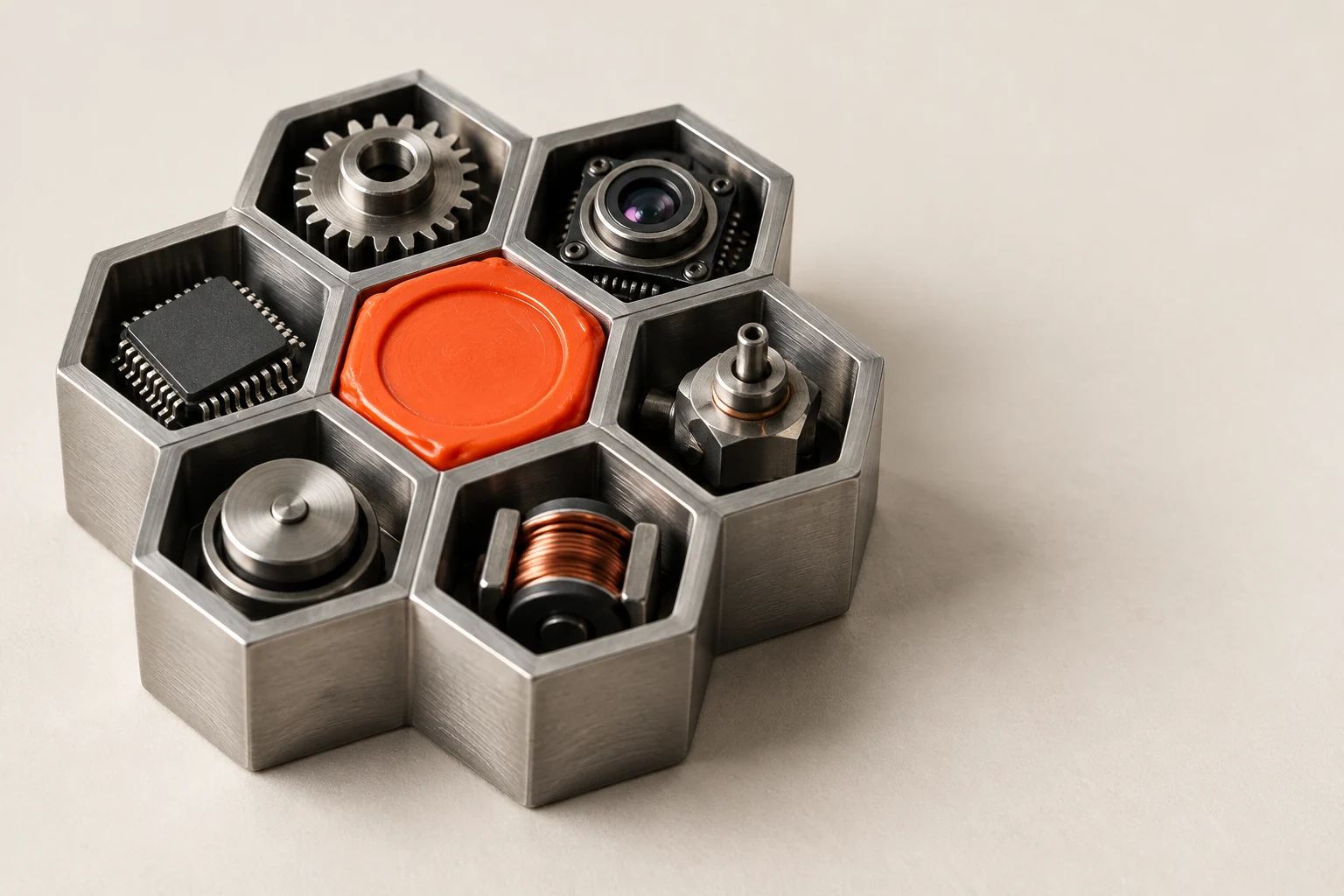
A steel honeycomb of sealed cells, each holding a different machine part, one sealed with an orange wax cap.
FIG. 19Zones and conduits — a honeycomb where every cell is sealed separately.

The problem

Every sensor you add is a network device

Operational technology networks were built for availability, long before anyone expected a camera or a vibration sensor to run an operating system. Each inspection station, gateway and wireless node adds an endpoint, and security reviews rightly ask: what does it listen on, what does it talk to, who can update it, how are updates signed, and what open-source components does it contain?

Projects stall for months when a vendor cannot answer in writing. Worse, some get approved without anyone asking. We answer before the first device is unboxed, and design the system so the answers are short.

IEC 62443 concepts

How IEC 62443 shapes the design

IEC 62443 is the family of standards for industrial automation and control system security. These parts matter most for edge devices.

Zones and conduits

Assets with similar security needs are grouped into zones, and every connection between zones runs through a defined conduit with its own controls, following the partitioning approach of IEC 62443-3-2. Perflens devices sit in their own zone.


Security levels

Security levels 1 to 4 describe resistance to increasingly capable attackers, from casual or accidental misuse up to sophisticated, well-resourced attacks. We help set a target level per zone and show what the design achieves.

System requirements (62443-3-3)

The seven foundational requirements — identification and authentication, use control, system integrity, data confidentiality, restricted data flow, timely response to events and resource availability — mapped to the system design.

Component requirements (62443-4-2)

Lensnode, Pulsenode and Gatepoint are designed in line with component requirements for embedded and network devices — authentication, signed software, audit logging and secure configuration.

Alignment, not certification

Perflens designs its devices and systems in line with IEC 62443-3-3 and IEC 62443-4-2. We do not hold, and do not claim, an IEC 62443 certification. What we provide is a written requirements mapping that your security team or assessor can review line by line.

Hardening and supply chain

What we build into every device

Hardened by default

No default passwords, unused services and ports disabled, least-privilege accounts, a host firewall and a documented baseline configuration.

Secure boot and TPM 2.0

Each Gatepoint boot stage is verified before it runs, with keys held in a TPM 2.0 module rather than on disk.

Signed A/B updates

Only signed software installs. A failed update rolls back on its own, and you choose the maintenance window.

SBOMs for every release

A machine-readable software bill of materials ships with every firmware release and is monitored against newly published vulnerabilities.

Coordinated vulnerability disclosure

Report issues to security@perflens.com. We acknowledge, triage, fix, advise affected customers and credit reporters who want it.

Outbound-only remote access

Remote support uses an outbound, customer-controlled connection with no inbound ports. You enable it and can switch it off at any time.

Network footprint

What touches your network

Inbound connections from the internet
None
Internet requirement
None; all inference, storage and the Console run on site
Remote support
Outbound-only, customer-controlled, can be disabled at any time
Plant protocols
OPC UA, MQTT with Sparkplug B, Modbus TCP/RTU, EtherNet/IP, PROFINET — enabled only where used
User access
SSO via SAML 2.0 or OpenID Connect, role-based access, full audit log
Device identity and integrity
Certificates managed in the Console Fleet module; TPM 2.0 and secure boot on Gatepoint

For equipment makers

Preparing for the EU Cyber Resilience Act

If you build machines or devices with digital elements and sell them in the EU, the Cyber Resilience Act (Regulation (EU) 2024/2847) applies to you. It entered into force on 10 December 2024 and takes effect in two stages:

  • Reporting obligations have applied since 11 September 2026. Manufacturers must report actively exploited vulnerabilities and severe incidents through ENISA's single reporting platform, starting with an early warning within 24 hours of becoming aware and a fuller notification within 72 hours.
  • Most other obligations apply from 11 December 2027, including the essential cybersecurity requirements, conformity assessment and technical documentation for products placed on the market.

We help with the engineering side: scoping affected products, product risk assessment, an SBOM pipeline, a vulnerability handling and reporting process, secure updates, and technical inputs for your documentation, often through our embedded engineering team. We are engineers, not lawyers — confirm your obligations with counsel.

Process

From security review to ongoing patching

  1. Security review pack

    Before the Proof of Value

    Architecture, data flows, port and protocol list, SBOMs and the IEC 62443 requirements mapping, sent to your security team before any device is installed.

  2. Zone and conduit design

    With your OT and IT teams

    Where Perflens devices sit, what crosses each conduit and which firewall rules enforce it, agreed and documented.

  3. Hardening verified at commissioning

    FAT and SAT

    The baseline configuration is checked device by device during acceptance testing and recorded in the handover file.

  4. Monitoring and patching

    Ongoing with Perflens Care

    New vulnerabilities are tracked against your SBOMs, and fixes ship as signed updates in your maintenance windows.

Honest fit

What this service covers — and what it doesn't

A good fit when

  • A security review is holding up an inspection or monitoring project
  • You build equipment for EU customers and need CRA-ready engineering
  • Critical infrastructure, data centers, pharmaceutical or other sites with strict OT security policies
  • You want written answers about every device before it touches the network

Probably not when

  • You need a certificate — we design in line with IEC 62443 but do not issue or hold certifications
  • You need a full site OT security program with monitoring and incident response; we secure what we deploy and work alongside your security provider

FAQ

Questions we hear often

Are Perflens products IEC 62443 certified?

No. They are designed in line with IEC 62443-4-2 component requirements, and our systems with IEC 62443-3-3 system requirements. We provide a requirements mapping for your review instead of claiming a certification we don't hold.

How do we report a vulnerability?

Email security@perflens.com with as much detail as you can share. We acknowledge it, keep you informed through triage and fix, and coordinate disclosure with you.

Does Perflens need internet access at our site?

No. Everything runs on site. Remote support is optional, outbound-only and under your control. Our field note on air-gapped AI covers fully disconnected sites.

Can we see SBOMs before we buy?

Yes. SBOMs are part of the security review pack we send before a Proof of Value, along with the port list, data flows and the IEC 62443 mapping.

Does the Cyber Resilience Act apply to us?

It applies to products with digital elements placed on the EU market, so it depends on what you sell and where. We help scope products from an engineering view; your counsel should confirm the obligations.

Send us your security questionnaire

We'll answer it in writing — ports, data flows, update signing and SBOMs — before a single device touches your network.