Sense
Lensnode smart cameras see visible, thermal and multispectral detail at line speed. Pulsenode nodes measure vibration, ultrasound, temperature and electrical signatures on the assets that keep the line running.
Perflens Edge Stack
Cameras and sensors on the asset, an AI gateway beside the line, software on your own network and a team that keeps the models accurate. Four layers, designed together and owned by you.

Why one stack
Most plants already run three monitoring estates. Quality has a vision system on the line. Maintenance has a vibration route, or a cloud sensor subscription with its own app. Facilities has a building management system and a stack of utility bills. Each came from a different vendor, each has its own login and data model, and none of them can tell you that the compressor short-cycling at 2 a.m. is the same one starving the pneumatic reject gate on line 3.
The Perflens Edge Stack replaces those seams with one design. The same Gatepoint gateway can run an inspection model on two cameras and a bearing-fault model on twenty vibration nodes. The same Perflens Console shows the reject gallery, the gearbox trend and the compressed-air baseline. Every layer speaks the industrial protocols your controls team already supports, and none of it needs an internet connection to work.
Four layers
Each layer does one job. Use all four, or start with the one your problem needs and add the rest later.
Lensnode smart cameras see visible, thermal and multispectral detail at line speed. Pulsenode nodes measure vibration, ultrasound, temperature and electrical signatures on the assets that keep the line running.
Gatepoint edge AI gateways run inspection and condition models beside the asset, drive reject gates and stack lights through isolated I/O, and keep working when the network does not.
Perflens Console runs on the Gatepoint or a server in your building. It shows live inspection, asset health, OEE and facility data, and routes alerts to the people who act on them.
Perflens Care watches every model for drift, verifies alerts, retrains on new material and pushes signed updates, so the system you accepted at handover is still the system you have in year three.
How data flows
The same path applies whether the signal is a camera frame, a bearing spectrum or a power reading. Every step happens on your site.
An encoder pulse or photo-eye triggers a Lensnode exposure synchronized with its strobe. Pulsenode W wakes on schedule and samples tri-axial vibration, surface temperature and magnetic flux. Sensors do their first pass of processing on board.
The Gatepoint runs the model and returns a verdict in under 40 ms frame-to-I/O for typical inspection models. A reject output fires, a stack light changes, or a condition score crosses its threshold.
Each decision is stored with its image or signal, the model version, the confidence and the reason. Quality can audit any reject; maintenance can see the trend that led to an alert.
Alerts reach the right person by SMS, email, Microsoft Teams, Slack or stack light, or open a work order in your CMMS with the evidence attached. Results flow to your MES and historian over OPC UA or MQTT.
Confidence, reject rates and image statistics are tracked against the baseline agreed at commissioning. When they drift, an analyst reviews the evidence and retraining is scheduled before detection drops.
Why edge
A reject gate needs an answer before the part reaches it. A round trip to a cloud region adds delay and jitter you cannot control; a gateway beside the line does not.
Images of your product, your process and your people stay inside your fence. Nothing has to leave the site for the system to work.
You own the hardware, the data and the trained models, exportable as ONNX. If you ever change suppliers, your models and data go with you.
When the WAN goes down, inspection, alarms and local dashboards keep running. Multi-site data queues on the Gatepoint and syncs when the link returns.
Commitments and specifications
Frame-to-I/O decision latency for typical inspection models on Gatepoint
Production data that must leave your site for the system to work
Monthly on-device inference uptime target, measured on the Gatepoint
Pulsenode W battery life at hourly sampling
These are product specifications and service targets, not modeled outcomes. Latency depends on model size and camera count; battery life depends on sampling rate.
Explore the platform
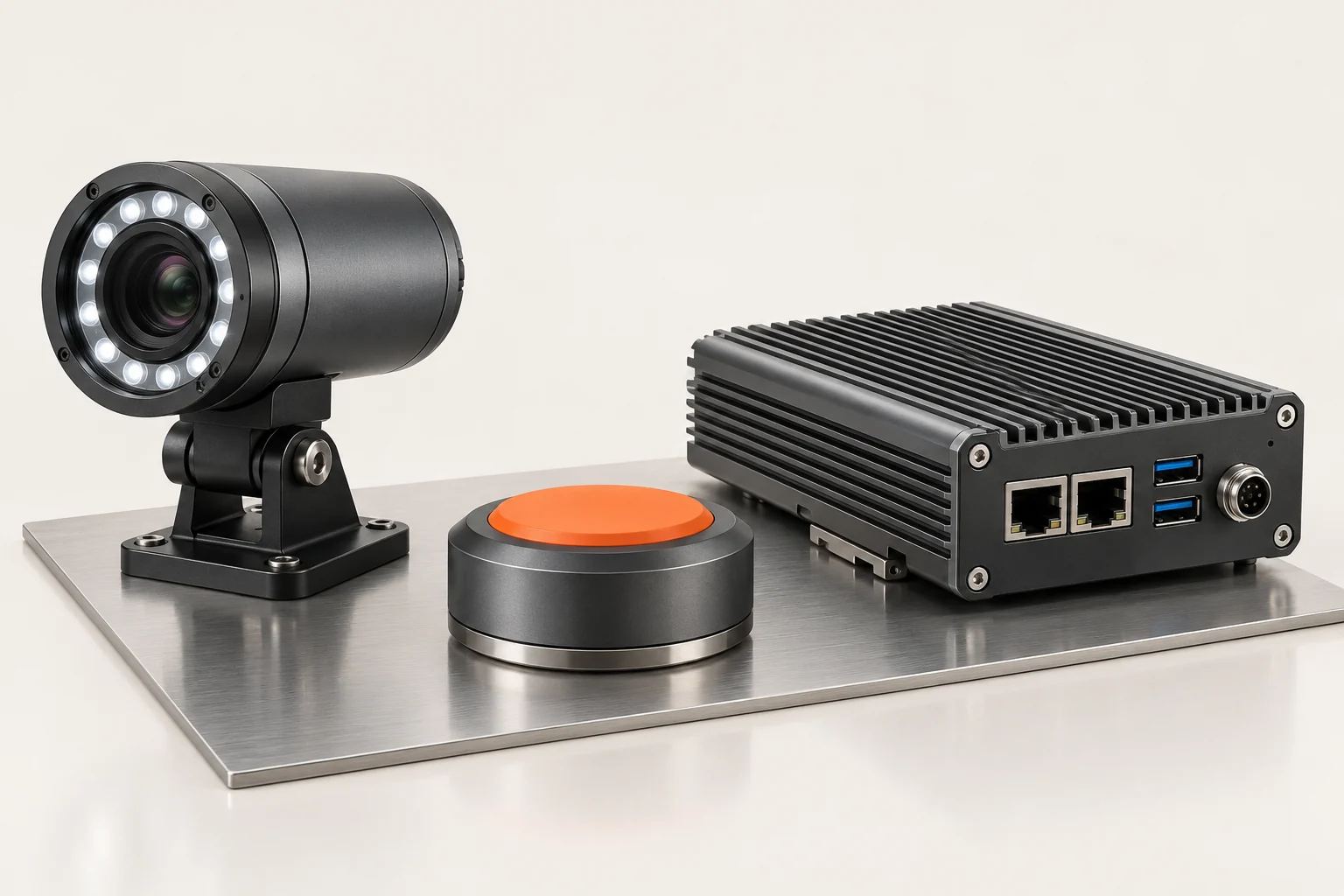
Lensnode cameras, Pulsenode sensors and Gatepoint gateways, with environmental ratings, mounting conventions and a 7-year supply commitment.
Read more
Six modules for inspection, asset health, OEE, facilities, models and fleet, running on your own network.
Read more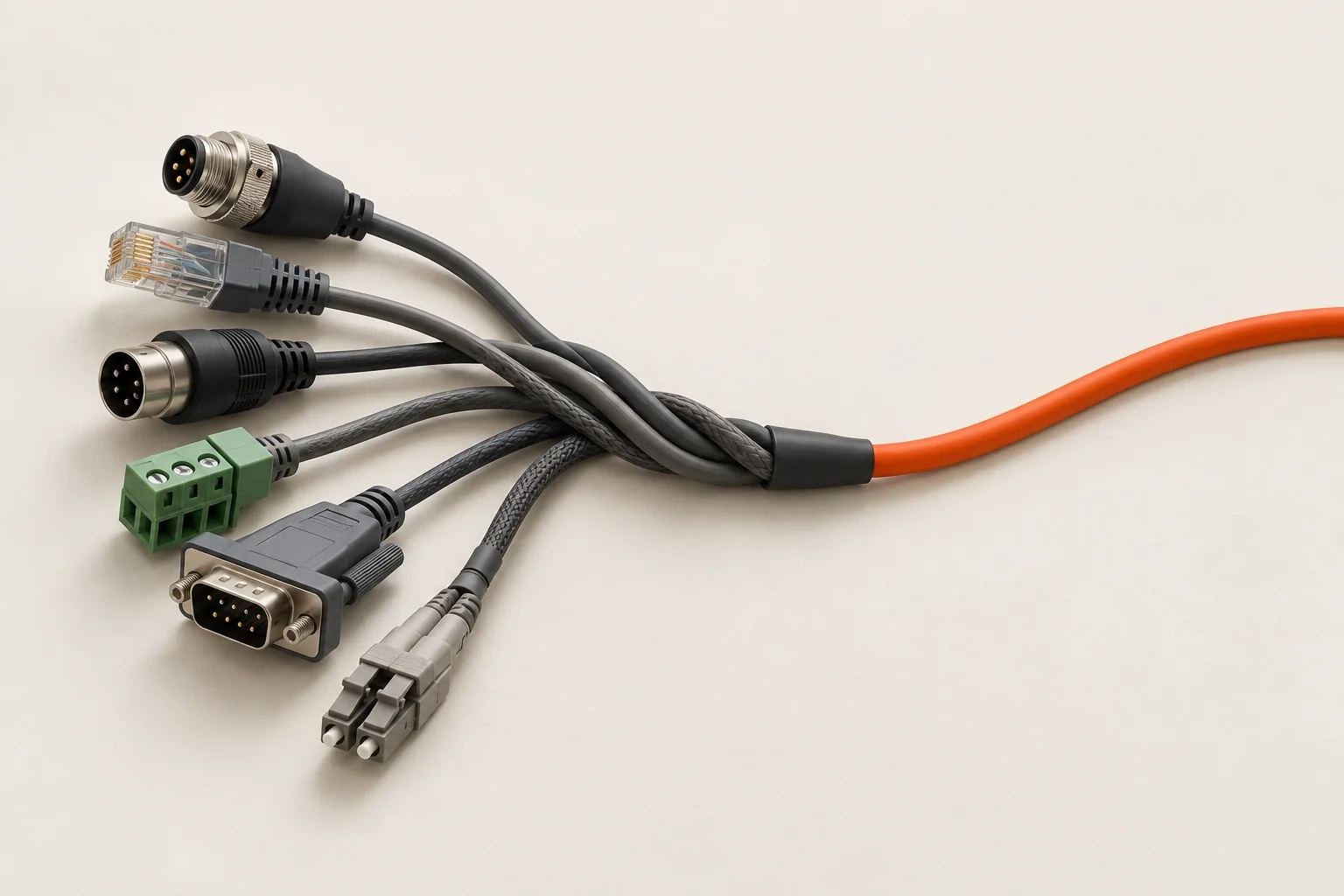
PLC handshakes, OPC UA, MQTT with Sparkplug B, fieldbus protocols and CMMS work orders, scoped and tested before go-live.
Read more
Secure boot, TPM 2.0, signed updates, outbound-only remote access, SBOMs and how to report a vulnerability.
Read moreWhere to start
You do not have to buy the whole stack. If your line already has good cameras, Vision Retrofit puts a Gatepoint and a trained model behind them. If you need to know which drives are about to fail, predictive maintenance starts with Pulsenode W and a gateway. If the problem is a utility bill, facility and energy monitoring starts with sub-metering and an ultrasound leak survey.
Each starting point uses the same Console, the same security model and the same Care desk, so the second project plugs into what the first one built.
FAQ
No. You can start with one inspection station or 25 monitored assets. The layers are designed to work together, but each has a defined interface — a Gatepoint can run behind your existing cameras, and results can flow straight to your historian.
No. Inference, storage, dashboards and alerting run on the Gatepoint or an on-premise site server. A link is only needed if you choose remote support or multi-site aggregation, and both are outbound-only connections you can switch off. See the Security & Trust Center.
It fails to a state you choose at commissioning — usually holding the reject gate in a safe position and raising a stack light rather than stopping the line. A replacement restores its configuration and models from Console, and advance replacement times are set by your Care tier.
You do. Models are exportable as ONNX, an open format that other runtimes can load, and every model ships with a model card describing its training data, measured accuracy and known limits.
Yes. Gatepoint reads PLC tags, meters and drives over OPC UA, Modbus, EtherNet/IP and PROFINET, so machine states and process values from existing equipment sit alongside Perflens sensor data. See integrations.
In a 45-minute discovery call we'll work out which layers your defect, asset or building actually needs — and which it doesn't.