Web-break early warning
Cameras at the draws where breaks tend to start flag edge cracks, holes and wrinkles, and the system trends those events so a rising count prompts action before the break.
Packaging, paper & wood
We inspect print and glue lines with AI vision, and monitor the drives, dryers and saws behind them, on continuous lines where an unplanned stop is counted in tonnes of broke and hours of rethreading.
What goes wrong
On a paper machine or a corrugator, a web break is never just a stop. The machine has to be cleared and rethreaded, the broke has to be handled, and the schedule for every downstream order shifts. Most breaks have a cause that was visible earlier: an edge crack, a hole, a draw running slack, a dryer section running unevenly.
Converting has its own quiet failures. A folder-gluer that skips a few centimeters of glue line produces cartons that look perfect on the pallet and pop open on your customer's case erector. A print station drifting out of registration can run a full order before anyone pulls a sheet. And in sawmills and wood-products plants, the saws, chippers and blowers run in dust that hides problems from view, where a hot bearing is a fire risk as well as a maintenance problem.
Maintenance teams in these plants cover hundreds of rotating assets across long machines. Route-based vibration readings once a month can't keep up with a gearbox that degrades in two weeks.
Applications
Cameras at the draws where breaks tend to start flag edge cracks, holes and wrinkles, and the system trends those events so a rising count prompts action before the break.
Misregistration, missing ink, smears and color shift on printed corrugated and folding cartons, checked on every sheet rather than on a pulled sample.
Hot-melt glue shows clearly in thermal images, so a Lensnode T confirms presence, position and continuity on folder-gluers. Cold glue is checked in visible light, sometimes with a tracer additive.
Wireless Pulsenode W sensors on drives, gearboxes and fans trend vibration and temperature. With Care Verified, an analyst checks each alert before it reaches your planner.
Fixed thermal views of dryer cans, bearing housings and press rolls. An uneven temperature profile across the machine can point to steam-supply or condensate problems before quality drifts.
Saw arbors, chippers, debarkers, hogs and dust-collection fans monitored for vibration and temperature, without running new cable through a dusty, high-vibration building.
Recommended stack
| Application | Hardware | Service |
|---|---|---|
| Web-break early warning | Lensnode V at critical draws, encoder-triggered; Gatepoint G4 | AI Visual Inspection |
| Print and registration | Lensnode V with strobed illumination; Gatepoint G2 or G4 | AI Visual Inspection |
| Glue-line inspection | Lensnode T for hot melt, Lensnode V for cold glue; Gatepoint G2 | Thermal & Multispectral Monitoring |
| Corrugator drives and gearboxes | Pulsenode W on bearings and gearboxes; Pulsenode C on drive motors | Predictive Maintenance with Care Verified |
| Dryer and press section | Lensnode T fixed views through viewing ports; Gatepoint G4 | Thermal & Multispectral Monitoring |
| Sawmill rotating equipment | Pulsenode W; Pulsenode U for early lubrication faults | Predictive Maintenance |
Environment and compliance
Honest fit
See it in context
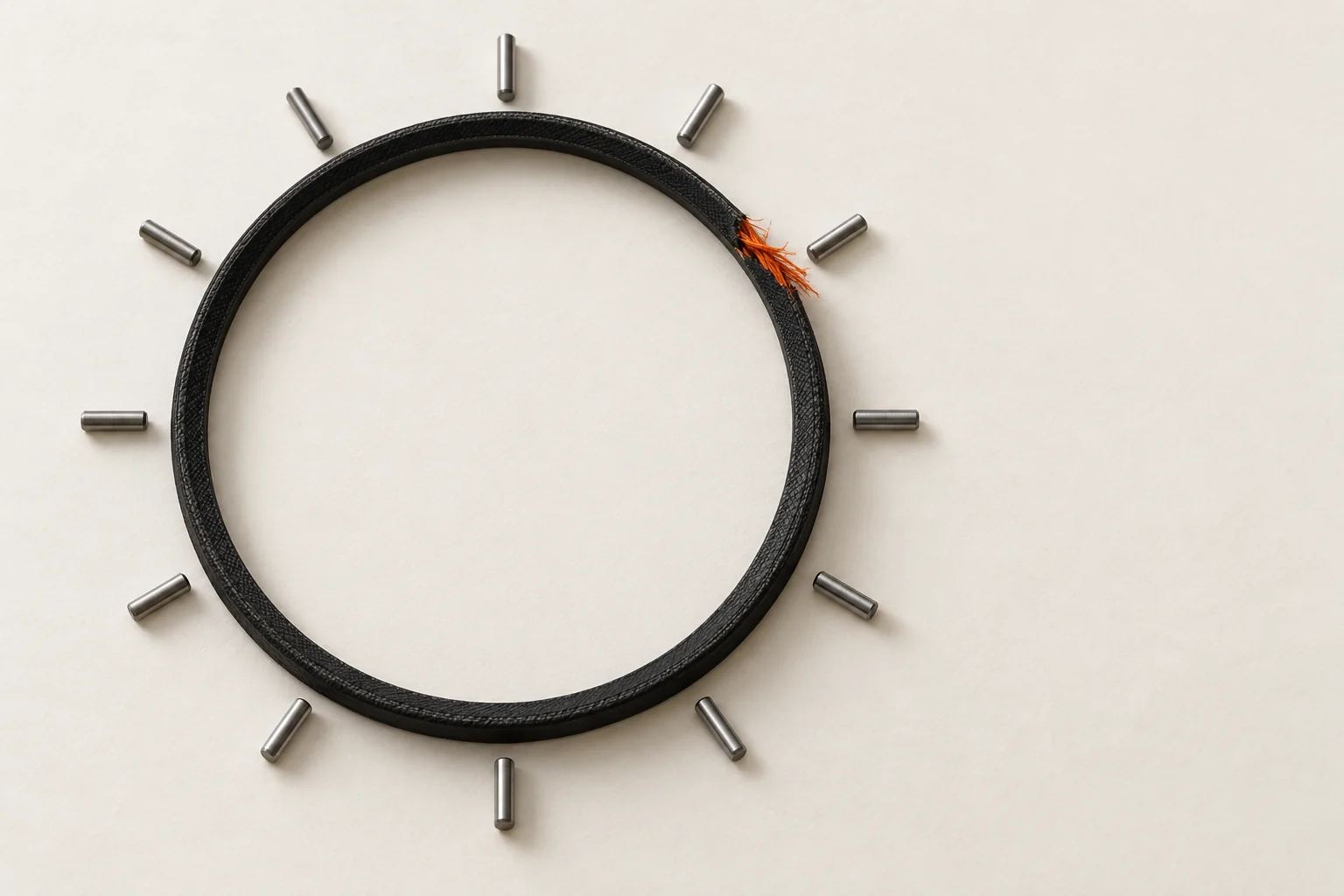
Pulsenode W on critical drives, gearboxes and fans, with Care Verified analysts checking every alert. In the modeled scenario, unplanned downtime on monitored assets falls about 35%.
Read more
Vibration, ultrasound, temperature and motor-current monitoring with fault diagnostics and human-verified alerts.
Read more
Fixed radiometric thermal for glue lines, dryer sections and the electrical rooms that feed them.
Read moreFAQ
The Pulsenode W is IP68-rated, battery-powered and mounts directly on bearing housings and gearboxes. Battery life is up to 5 years at hourly sampling; faster sampling on critical assets shortens it, and the Console tracks every battery so replacements are planned rather than discovered.
No. Full-width web inspection on a wide, fast machine is specialized equipment, and if you have it, keep it. We add what it typically doesn't cover, such as thermal views of dryers and press rolls, condition monitoring on drives and targeted cameras at the draws where your breaks start.
Alerts route to SMS, email, Microsoft Teams or Slack, and can open work orders in your CMMS, including IBM Maximo, SAP PM, Fiix, Limble or UpKeep. With Care Verified, a Perflens analyst checks each alert within 4 hours on business days before it reaches your planner.
Sometimes, with care. We work from your area classification and dust hazard analysis, and we'll tell you which components can be installed in which areas and which must stay outside. We won't put equipment in a classified location it isn't rated for.
The asset-monitoring subscription starts at $89 per monitored asset per month (minimum 25 assets, 36-month term), including Pulsenodes, gateway, Console and Care Essentials. Care Verified adds $18 per asset per month. See pricing.
A 45-minute discovery call is enough to map your critical assets and inspection points and tell you whether a Proof of Value on 25 of them makes sense.