Yocto and board support packages
Reproducible embedded Linux images built with Yocto, BSPs for your carrier board, and a kernel maintenance plan that outlives the first release.
Edge Hardware
We write the embedded Linux, drivers, camera pipelines and microcontroller firmware — and design the boards — that put vision and sensing inside the equipment you ship. It is the same work behind every Lensnode, Pulsenode and Gatepoint we build.

The problem
Most embedded vision projects reach us at the same point. A prototype works on a development kit, running the vendor's stock image with a camera held on by a clamp. Turning that into a product means a custom carrier board, a board support package you control, a driver for the image sensor you actually chose, and a camera pipeline that does not drop frames when the enclosure is at 50 °C.
Then come the parts customers and regulators now expect: secure boot, updates that cannot brick a unit in the field, a software bill of materials, and a plan for patching the kernel for as long as the machine is supported. Each of these is its own specialty, and small engineering teams rarely have all of them in-house.
How it works
Reproducible embedded Linux images built with Yocto, BSPs for your carrier board, and a kernel maintenance plan that outlives the first release.
Image-sensor drivers over MIPI CSI-2 and V4L2, industrial I/O, Ethernet and fieldbus interfaces — written, tested and maintained in your own Yocto layers.
GStreamer pipelines from sensor to inference with zero-copy buffers, hardware encoding, and timestamps tied to triggers and encoders.
Real-time firmware for sensor nodes, radios and power management — the layer that lets a wireless node run for years on one battery.
Schematics, layout, carrier boards, sensor boards and power stages, designed for manufacture and for test from the first revision.
A hardware root of trust with TPM 2.0, signed images, dual partitions with automatic rollback, and a software bill of materials generated with every build.
Our own hardware
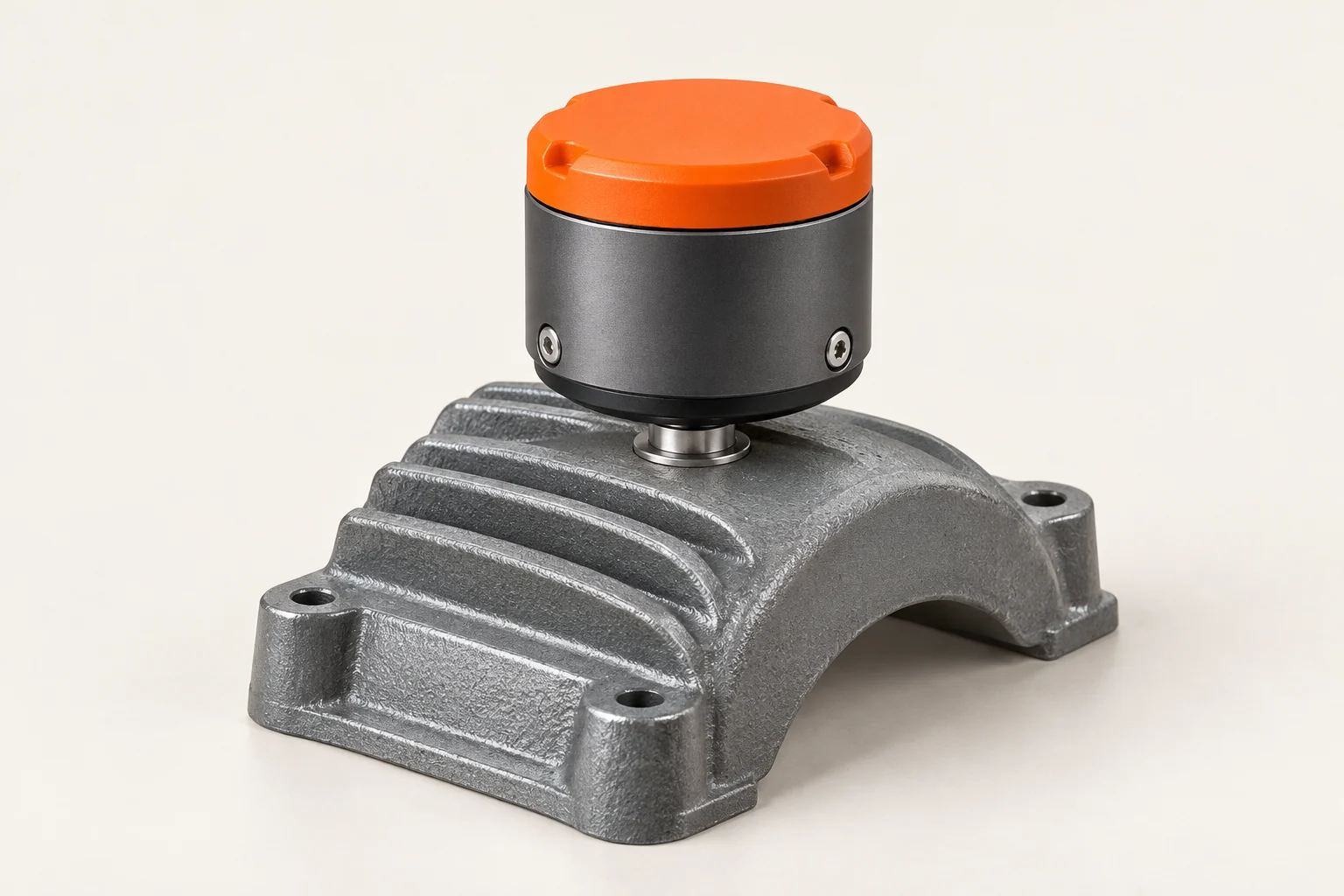
Every Perflens product runs firmware we wrote. Pulsenode W's sampling and radio firmware is why it can reach five years on a battery at hourly sampling. Lensnode's on-board pre-processing runs in our camera pipeline. Gatepoint's secure boot and A/B updates are our own implementation, exercised on every release we ship to the field.
Equipment makers get the habits that come with that: watchdogs on every process that matters, graceful degradation when a sensor fails, updates that roll back on their own, logs that survive a power cut, and release notes that say exactly what changed. We call it boring reliability, and we mean it as a compliment.
Process
Requirements, platform choice, security model and support period are agreed in writing, including what happens when key parts go end-of-life.
Carrier or sensor board designed and built, BSP and drivers brought up, and the camera pipeline running on your hardware.
Inference, I/O and protocol integration, then secure boot, signed A/B updates, SBOM generation and a hardened default configuration.
Environmental and long-duration testing, manufacturing test fixtures, and a maintenance plan for kernel and security updates over the product's life.
Deliverables
Platforms and tools
Honest fit
See it in context
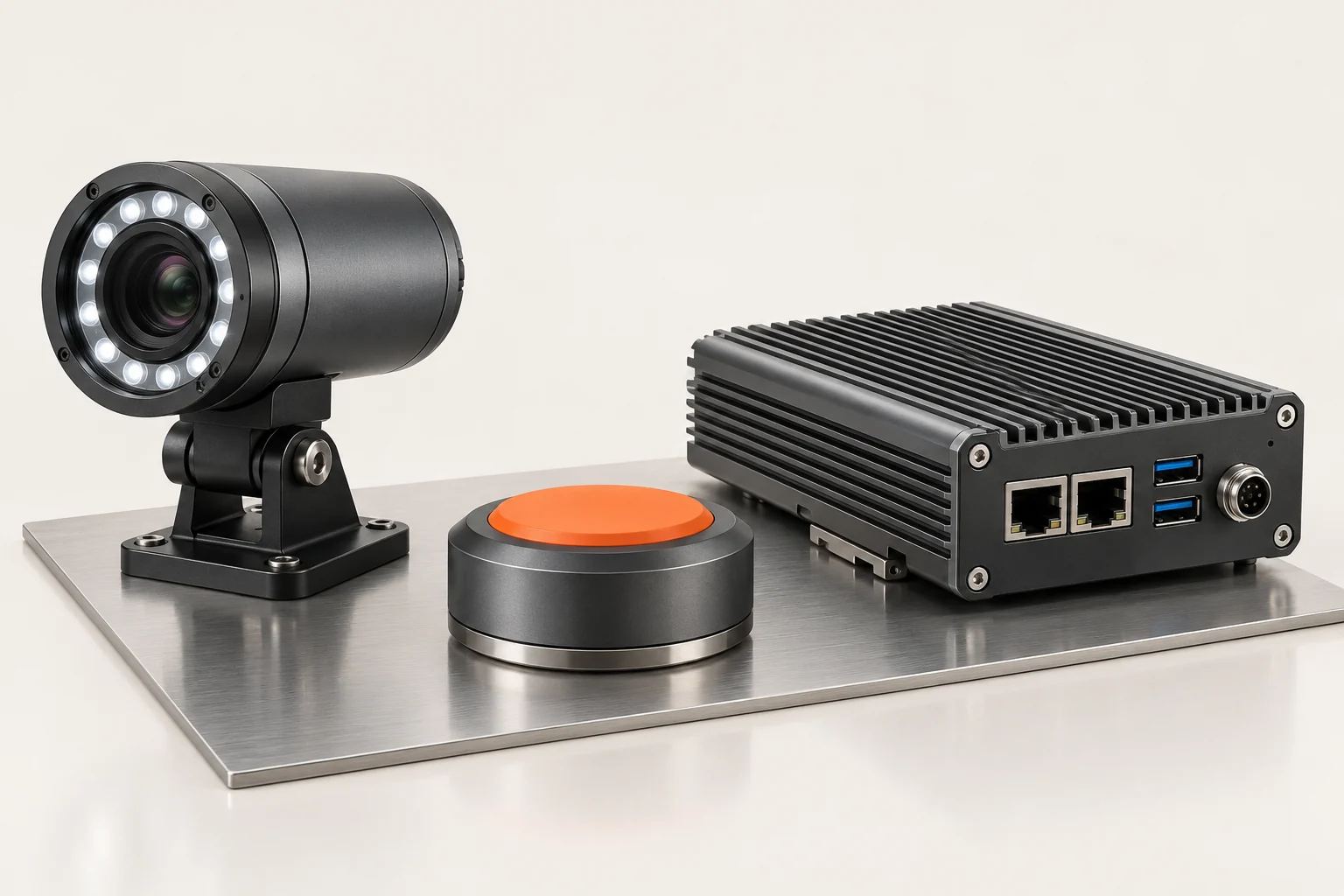
Our own sensors and gateways, built on the firmware, boards and update system described on this page.
Read more
Machine builders adding inspection and condition monitoring to converting, forming and packaging equipment.
Read more
Equipment where traceable software, documented changes and secure updates are part of the product.
Read moreFAQ
You do. Source code, hardware design files and the signing keys for your product are delivered to you, in your repositories.
Yes. We start with an audit of the build, the BSP, the update path and the security posture, then give you a written list of what to keep, fix and replace.
Each release carries an SBOM, which we monitor against newly published vulnerabilities. A maintenance plan sets how kernel and library updates are tested and shipped through the signed update channel.
On the engineering side, yes — secure boot, signed updates, SBOMs and a vulnerability handling process. See edge and OT security for how we support CRA readiness.
We build prototypes, pilot units and small production runs. For larger volumes we deliver a manufacturing package — fabrication outputs, test fixtures and procedures — for your contract manufacturer.
Tell us what the prototype does today and where it has to ship. We'll tell you what stands between the two.